Budgeting: How to budget for a holiday with your dog, or without one
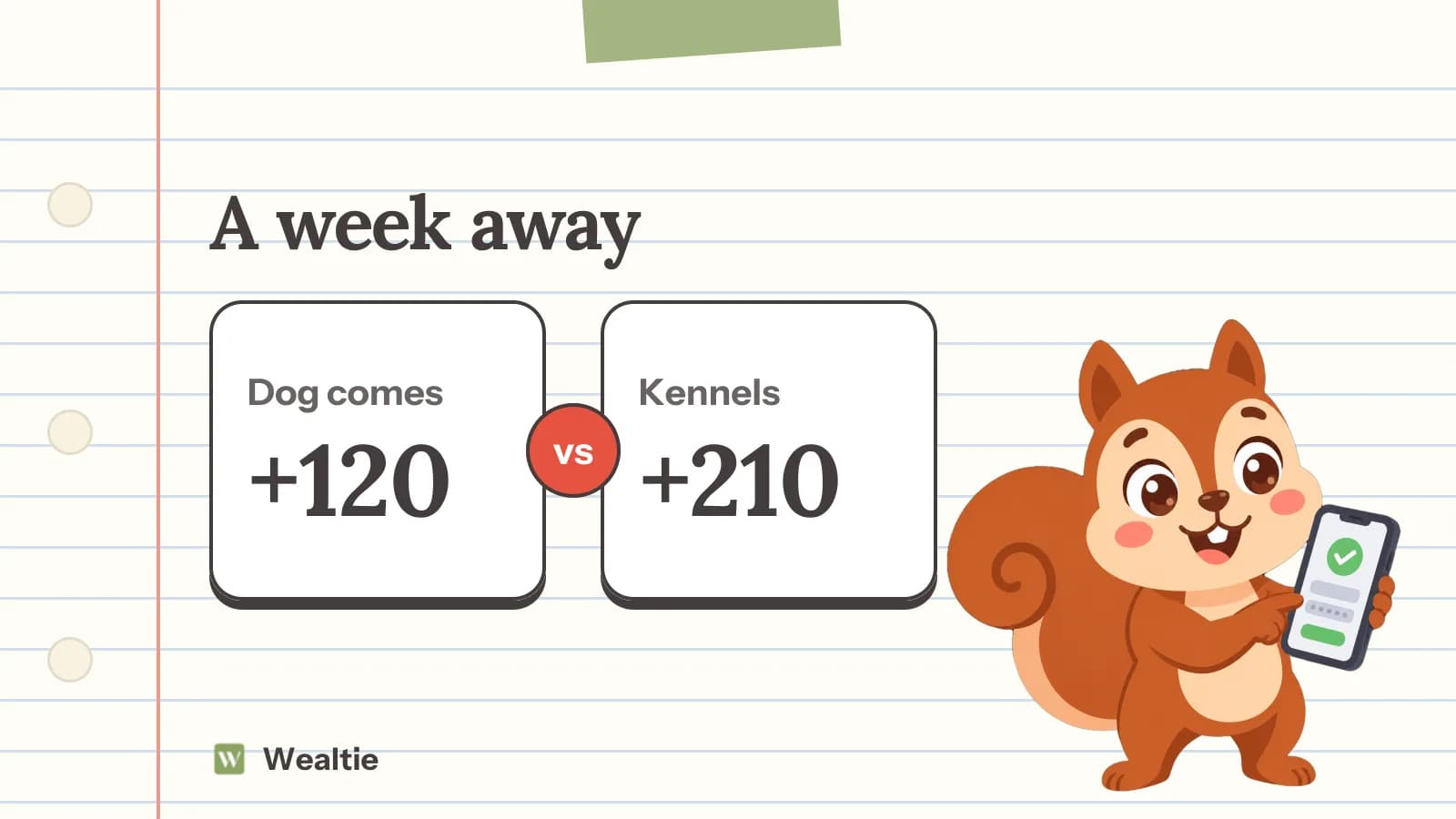
Taking a holiday with a dog means budgeting for dog-friendly accommodation, travel and any paperwork, or for kennels or a sitter if the dog stays home. In a worked example, taking the dog adds about 120 to a week away, while kennels cost about 210.
 By Wealtie Team · 3 min read
Key takeaways
- Taking your dog on holiday means budgeting for dog-friendly accommodation, travel and extras.
- Leaving your dog at home means paying for kennels, a sitter or a friend's help.
- In a worked example, taking the dog adds about 120 to a week away, while kennels cost about 210 and a home sitter about 280.
- Book dog-friendly places and kennels early, since they fill quickly in holiday season.
How do you budget for a holiday with your dog?
Decide first whether the dog comes with you, then add the costs that come with that choice, including the ones that are easy to forget. Taking a dog on holiday saves on kennels, but adds costs for dog-friendly accommodation and travel. Leaving the dog at home means paying for care. Comparing both helps you choose what suits your dog and your budget.
What does each option cost?
Here's a worked example for a week away, in round numbers that work in any currency:
| Option | Added cost |
|---|---|
| Taking the dog: pet fee, food, travel extras | 120 |
| Kennels, 7 nights at 30 | 210 |
| A sitter at home, 7 days at 40 | 280 |
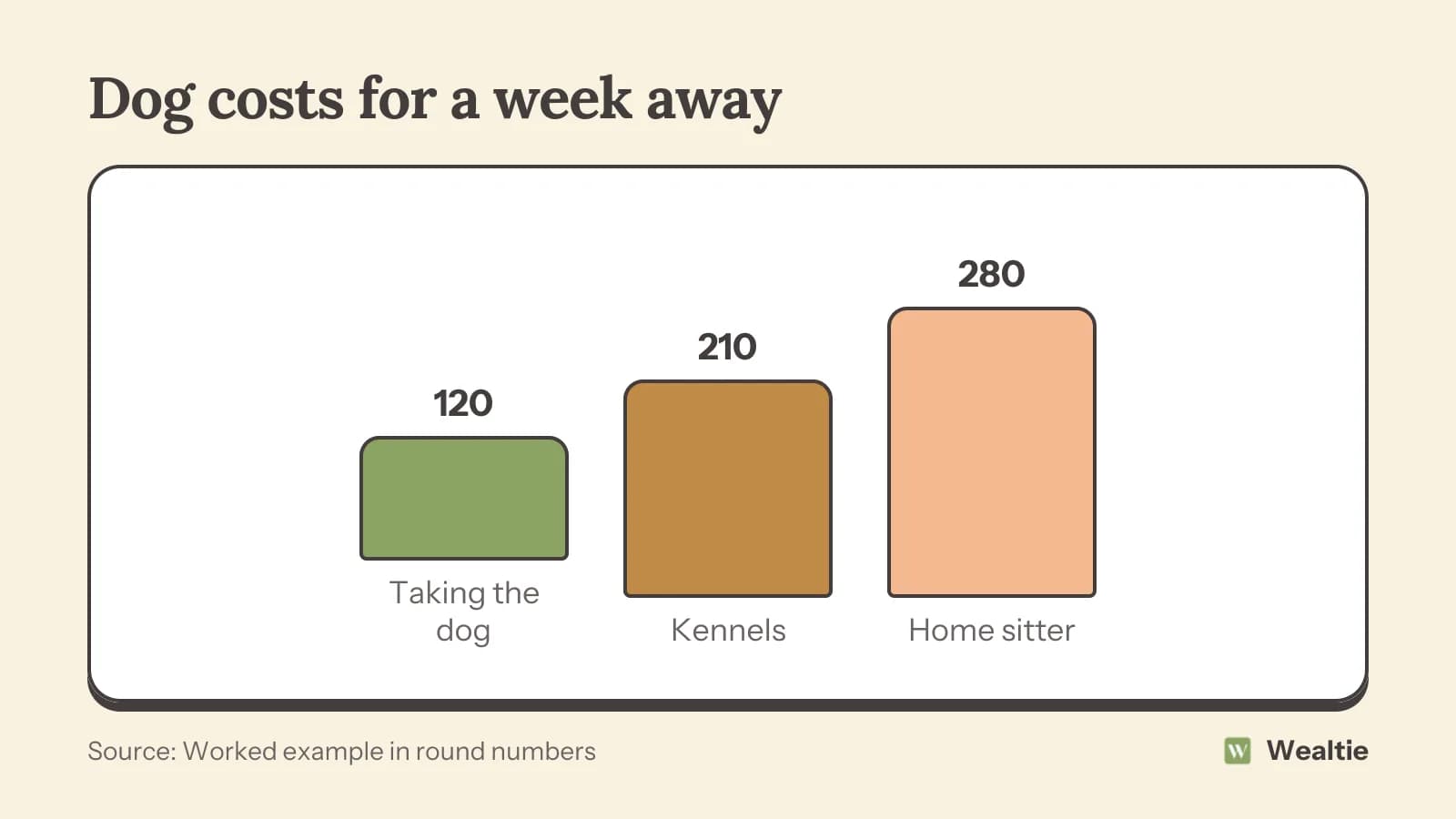
In this example, taking the dog is cheapest, but only if you can find suitable accommodation and the trip suits your dog. Older dogs, anxious dogs and dogs who don't travel well might be happier at home with a sitter, and their comfort is worth paying for. For a long journey or a busy city break, care at home might be kinder and less stressful.
What does taking your dog involve?
Several costs and checks:
- Accommodation: many places accept dogs, sometimes for a fee per stay or per night
- Travel: car journeys are easiest; trains and ferries may charge or have rules
- Food and supplies: bring enough of their usual food to avoid buying at higher prices
- Paperwork: for travel abroad, there may be vaccinations, health certificates and other requirements
Check official guidance for pet travel well in advance if you're going abroad, since requirements can take weeks or months to meet. Make sure your pet insurance covers you away from home, and find a vet near where you're staying before you go, just in case. Take a copy of your dog's vaccination records and any medication with you.
How do you find dog-friendly places for less?
Book early, since dog-friendly accommodation can be limited in busy seasons. Compare the total price including pet fees, which vary a lot. Self-catering cottages and campsites are often more relaxed about dogs than hotels. Read the rules, like whether dogs can be left alone in the property, since that affects your plans. Some places limit the number or size of dogs, so check before booking.
What about kennels or a sitter?
Kennels and boarding are often cheaper than a home sitter, while a sitter lets your dog stay in familiar surroundings and can also water plants and collect post. Ask friends or family if they'd help, perhaps in exchange for returning the favour. Pet-sitting swaps with other dog owners can cost nothing.
Book kennels well ahead for school holidays, since they fill up. Visit first if you can, to see the space and meet the staff. Check what's included, like walks and food, and whether vaccinations need to be up to date.
How do you keep the trip affordable?
Plan dog-friendly activities, like beaches, walks and pub gardens, which are usually free. Avoid places where the dog can't come and would need to be left, since that can mean paying for day care. Bring a basic first-aid kit, a bed and toys from home to avoid buying them on the trip. Plan regular stops on long car journeys, with water and a short walk, which keeps your dog comfortable and avoids paying for an extra night on the way. A familiar blanket can help a nervous dog settle in a new place.
What about day trips without the dog?
If you want to visit somewhere dogs can't go, like a museum or a theme park, you'll need a plan. Some places offer dog day care nearby, and some dog-friendly accommodation can recommend local sitters. Count these costs in the budget, or plan days where the dog can come along, so you're not paying for care every day.
How do you plan dog costs across the year?
Holidays are one of several predictable pet costs, alongside vaccinations, insurance and food. A monthly amount set aside covers them. How to budget for a pet puts holiday care alongside the rest.
How do you track pet costs in Wealtie?
Give your dog its own line in your expense categories, so you can see what pet costs come to over a year, including holidays and kennels. A monthly limit in the budget tracker helps in holiday months, when extra costs pile up.
Questions people ask
About 120 extra for a week away in a worked example, covering pet fees, food and travel extras.
Often cheaper to take the dog, if you can find suitable accommodation. Kennels or a sitter cost more but may suit some trips better.
Requirements vary, but often include vaccinations and health paperwork. Check official guidance well in advance.
Ask friends or family, set up a pet-sitting swap with other owners, and book kennels early.
This article is general information, not financial, tax or legal advice. Your situation is your own; check the numbers that apply to you before you act on them.