Budgeting: The cost of owning a boat: a yearly budget
The cost of owning a boat goes far beyond the price you pay for it, with mooring, insurance, maintenance, fuel, storage and repairs every year. In a worked example, a small second-hand boat costs about 3,000 a year to keep.
 By Wealtie Team · 3 min read
Key takeaways
- The cost of owning a boat includes mooring, insurance, maintenance, fuel and storage every year.
- In a worked example, a small second-hand boat costs about 3,000 a year.
- Work out the cost per day you'll use it before buying.
- Hiring, sharing or joining a club can cost far less.
What is the cost of owning a boat?
More than most people expect when they first look at boats for sale. The purchase price is often the smaller part of the story. Every year, you'll pay for somewhere to keep the boat, insurance, maintenance, fuel and storage over winter, plus repairs that come along when you least want them. In a worked example, a small second-hand motorboat costs about 3,000 a year to keep, before you count what you paid for it.
Costs vary hugely with the size and type of boat, where you keep it and how much work you do yourself. Rules on licences, registration and safety equipment also differ by country, so check what applies where you'll sail.
What does a year of boat ownership cost?
Here's a worked example for a small second-hand boat, in round numbers that work in any currency:
| Cost | A year |
|---|---|
| Mooring | 1,200 |
| Maintenance and repairs | 700 |
| Insurance | 400 |
| Fuel | 400 |
| Winter storage | 300 |
| Total | 3,000 |
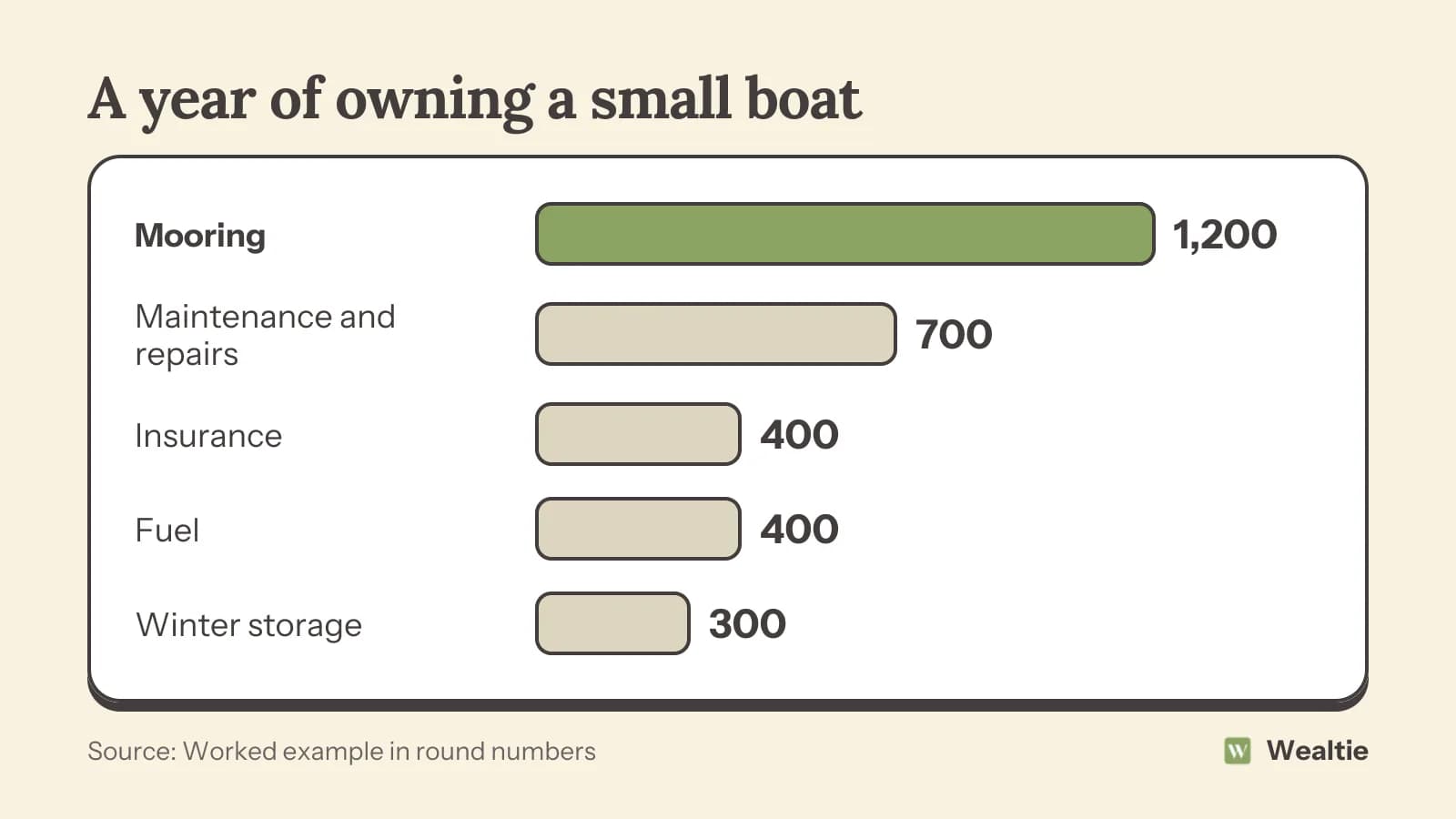
That's about 250 a month, every month, whether or not you take the boat out. A larger boat, a marina berth in a popular spot or an older boat that needs work can cost several times more.
What are the main costs of owning a boat?
Mooring or berth
Somewhere to keep the boat is often the largest yearly cost. A marina berth costs more than a simple mooring or a space in a boatyard. Keeping a small boat on a trailer at home can avoid this cost, if you have the space and a car that can tow it.
Maintenance and repairs
Engines need servicing, hulls need cleaning and antifouling, and sails, ropes and covers wear out. A common rule among owners is to expect something to need fixing every year. Doing simple jobs yourself saves money, but bigger repairs can be expensive.
Insurance
Most marinas require insurance, and it protects you if the boat is damaged, stolen or causes damage to others. The price depends on the boat's value, size and where you use it.
Fuel
Motorboats can use a lot of fuel, especially at speed. Sailing boats use far less. Your fuel bill depends on how often and how far you go, and how fast you like to travel, since fuel use rises sharply with speed.
Storage and other costs
Winter storage out of the water, lifting in and out, safety equipment, licences, club fees and kit like life jackets all add up.
Is owning a boat worth it?
Work out the cost per day you'll use it. If you take the boat out 20 days a year and it costs 3,000 to keep, that's 150 a day. Compare that with hiring a boat when you want one. If a day's hire costs 200 and you'd hire five times a year, that's 1,000, far less than owning. Cost per use explains how to compare like this.
Owning makes more sense if you'll use the boat often, enjoy working on it and have somewhere affordable to keep it. If you'll use it a few weekends each summer, hiring is usually cheaper.
Cheaper ways to get on the water
- Hire when you want to go out: no mooring, insurance or repairs.
- Share ownership: splitting a boat between a few people splits the costs too.
- Join a club: many sailing and boating clubs have boats members can use.
- Start small: a dinghy or kayak costs far less to keep than a cabin boat.
How do you budget for a boat?
Add the regular costs, like mooring and insurance, to your monthly budget. Then set up a sinking fund for repairs and maintenance, putting a set amount aside each month. In the worked example, the 700 for maintenance and repairs works out at about 60 a month. When the engine needs work, the money is already there.
Before you buy
Get the boat surveyed if it's second-hand, and ask the seller what it costs them each year. Price a mooring near where you'll use it. These checks often change what seems like a bargain. Add the yearly costs to the purchase price and think about how much you'd get back if you sold the boat in a few years, since older boats can be slow to sell.
How do you track boat costs in Wealtie?
Add mooring and insurance as recurring transactions, so they log themselves on their date. Put fuel, repairs and kit in a boat category among your expense categories, and set a budget for it, so you can see the full cost of ownership over a year.
Questions people ask
In a worked example, a small second-hand boat costs about 3,000 a year for mooring, maintenance, insurance, fuel and winter storage.
Mooring or a marina berth is often the largest yearly cost, followed by maintenance and repairs.
Usually, if you'll go out only a few days a year. Work out the cost per day of owning and compare it with hire prices.
Set aside a fixed amount each month in a repairs fund. In a worked example, about 60 a month covers 700 a year.
This article is general information, not financial, tax or legal advice. Your situation is your own; check the numbers that apply to you before you act on them.