Budgeting: The cost of a tutor, and whether it's worth paying for
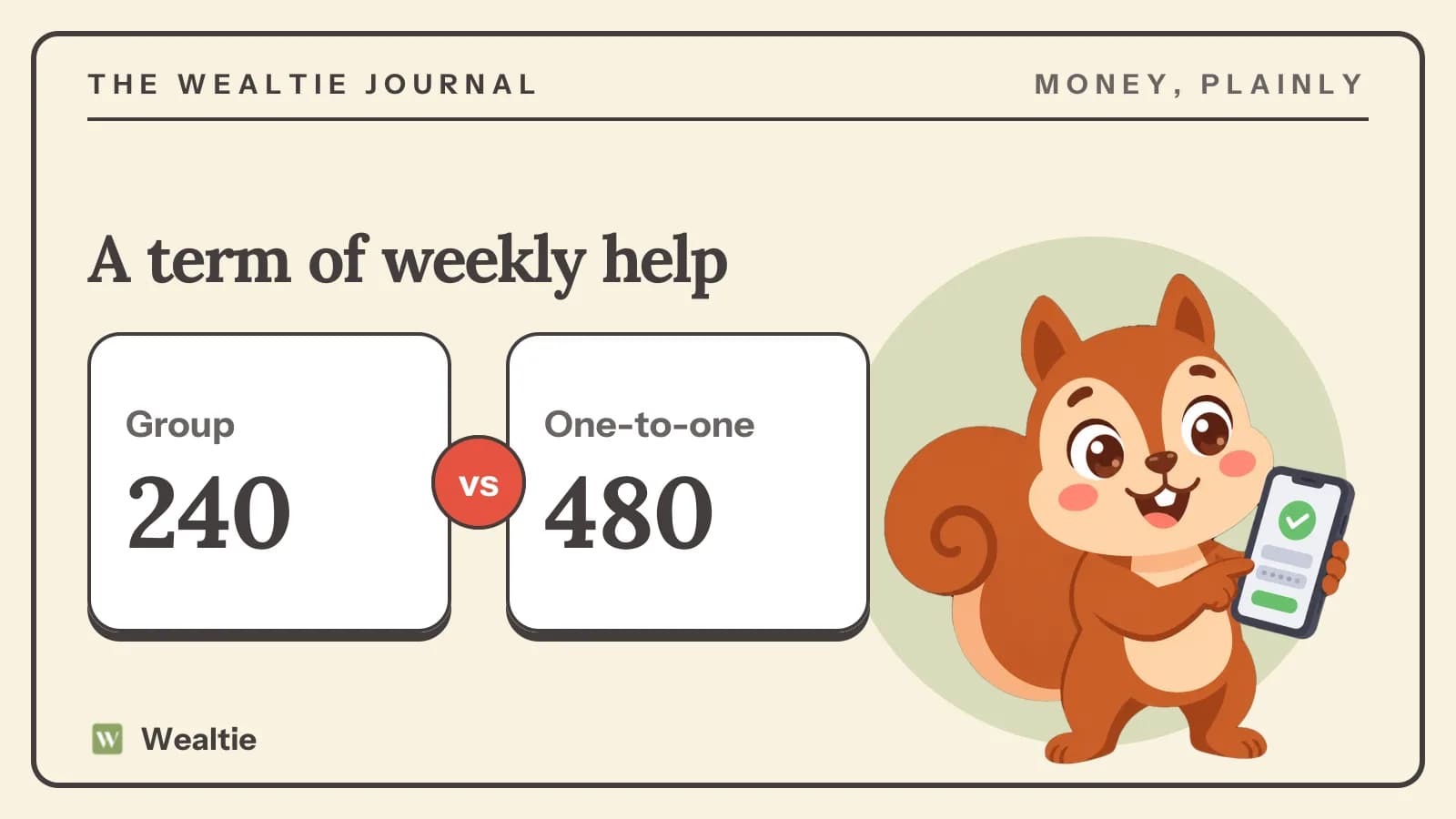
The cost of a tutor depends on the type of tutoring, the subject and how long you need it. In a worked example, a term of weekly one-to-one sessions costs 480, while group or online tutoring costs about half.
 By Wealtie Team · 3 min read
Key takeaways
- The cost of a tutor depends on one-to-one or group sessions, the subject and level.
- A focused block of sessions often helps more than open-ended weekly tutoring.
- Online and small-group tutoring cost less than in-person one-to-one.
- Free help from school, libraries and online resources is worth trying first.
What is the cost of a tutor?
Tutoring can help a child catch up, build confidence or prepare for an exam. The cost of a tutor depends on whether sessions are one-to-one or in a group, in person or online, the subject, the level and the tutor's experience. Specialist exam tutoring and higher-level subjects usually cost more than general homework help for younger children.
Here's a worked example of a 12-week term with one session a week, in round numbers that work in any currency:
| Type of tutoring | Term cost |
|---|---|
| Small group, 12 sessions at 20 | 240 |
| Online one-to-one, 12 at 25 | 300 |
| In-person one-to-one, 12 at 40 | 480 |
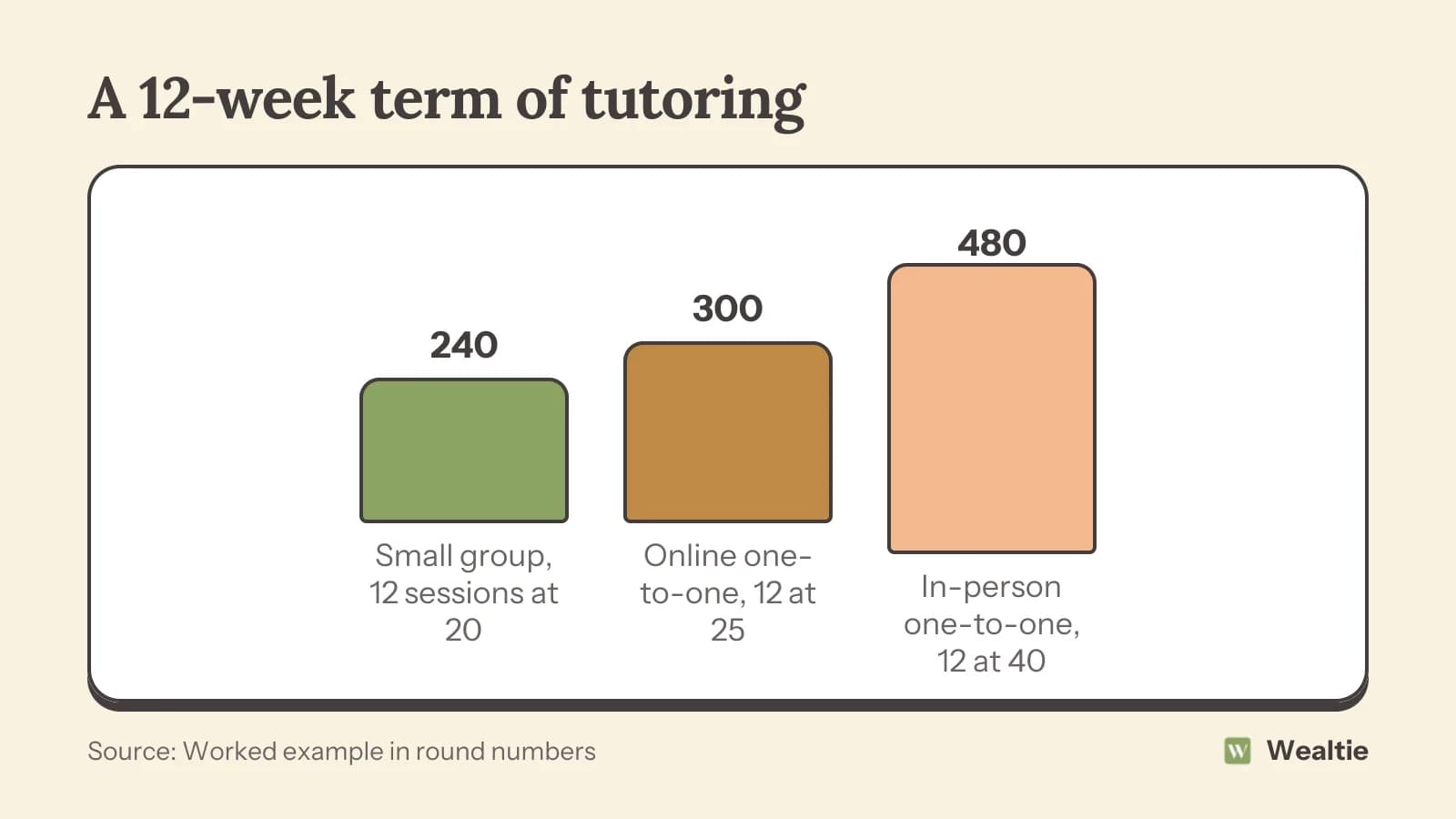
Rates vary widely between cities and tutors, so treat these as a starting point and check local prices. Over a full school year of around 36 weeks, the in-person option would come to about 1,440, which is why it helps to be clear about what the tutoring is for and how long you'll need it.
What type of tutoring is best value?
One-to-one in person
The tutor focuses entirely on your child and can adapt each session. It's the most expensive option, but it can work well for children who need a lot of support or struggle to concentrate in groups.
Online one-to-one
Online sessions often cost less, since the tutor doesn't travel, and you have a wider choice of tutors. They suit older children who are comfortable learning on a screen.
Small groups
Groups of three to six children cost less per child and can be motivating. They work best when the children are at a similar level.
Tutoring centres
Centres offer structured programmes, often in maths and reading. Check the contract carefully, since some ask for long commitments.
How many sessions does a child need?
The answer depends on the goal. A child who's fallen behind in one topic may only need a few sessions to catch up. Exam preparation often works well as a focused block, like eight sessions in the run-up, which would cost 320 at 40 a session. Ongoing weekly tutoring for a whole year is the most expensive approach, and it's worth reviewing every term to check it's still needed.
Agree a clear goal with the tutor at the start, like a topic to master or a grade to reach. That makes it easier to judge progress and decide when to stop.
How do you choose a tutor?
Ask the school first
Teachers know where your child is struggling and may suggest what kind of help would work best, or recommend tutors they trust.
Check experience and references
Ask about experience with the subject, level and exam board, and speak to other parents if you can. A trial session shows whether your child gets on with the tutor.
Agree terms in writing
Confirm the rate, how cancellations work, how often you'll get feedback and how payment works, for example per session, per month or per block.
What are cheaper ways to get help?
School support
Many schools run catch-up groups, homework clubs or revision sessions for free. Ask what's available.
Libraries and community groups
Libraries and community centres sometimes offer free homework help or reading schemes.
Free online resources
Video lessons, practice questions and past papers are widely available online for free, and can be enough for a motivated child.
Older students
University or sixth-form students often tutor for less than professional tutors and can be relatable for younger children.
Swapping skills
Some parents swap help with friends, like maths for one child in return for language practice for another.
How do you budget for tutoring?
Set a term budget
Decide how much you can spend per term and choose the type of tutoring that fits. A term at a time keeps the commitment manageable.
Save ahead for exam years
If you know an important exam year is coming, set a little aside each month in the year before. A sinking fund keeps it separate.
Review each term
Check progress with the tutor and your child. If the goal has been reached, stop or reduce sessions.
Look at all education costs together
Tutoring sits alongside uniforms, trips and supplies. How to budget for back to school covers the rest of the school year.
Finally, keep your child involved. Tutoring works best when they understand why they're having it and feel it's helping, so ask them how sessions are going as well as the tutor.
How can Wealtie help you track tutoring?
Add regular sessions as recurring transactions, so the monthly cost is always in your budget. Log tutoring in its own expense categories, and you'll see what each term costs, which makes the review at the end of each term easier.
Questions people ask
Costs vary by subject, level and location. In a worked example, a 12-week term of in-person one-to-one sessions cost 480.
Online tutoring often costs less than in-person sessions, since the tutor doesn't travel. In a worked example, a term cost 300 instead of 480.
Long enough to reach a clear goal. A short focused block often works for catching up or exam preparation, and it's worth reviewing every term.
Free options include school catch-up groups, homework clubs, library schemes and online video lessons and practice questions.
This article is general information, not financial, tax or legal advice. Your situation is your own; check the numbers that apply to you before you act on them.