Budgeting: The cost of a tattoo: pricing, tips and aftercare
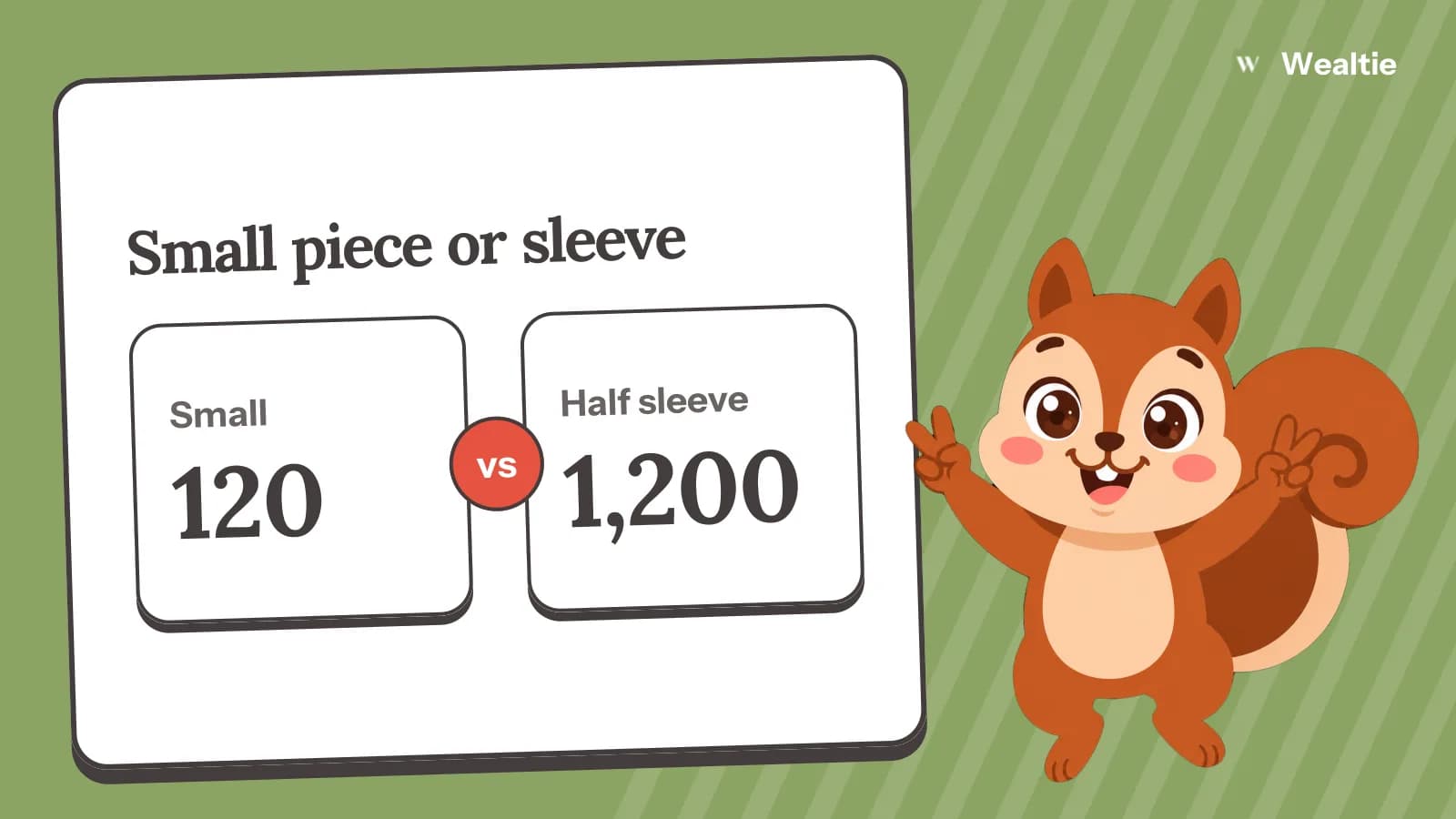
The cost of a tattoo depends on size, detail and the artist, with most priced by the hour or as a flat rate. In a worked example, a small piece costs 120, while a half sleeve over several sessions costs 1,200.
 By Wealtie Team · 3 min read
Key takeaways
- The cost of a tattoo depends on size, detail, placement and the artist.
- Many artists charge by the hour, with a minimum charge for small pieces.
- Deposits, tips and aftercare add to the total.
- Choosing an artist on price alone can cost more if you need it fixed or removed.
What is the cost of a tattoo?
The cost of a tattoo depends on how big and detailed it is, where it goes on your body, how experienced the artist is and where the studio is. Most artists either charge by the hour or give a flat rate for a design. Small, simple pieces are often priced at a studio minimum, while large work like a sleeve is done over several sessions and charged by the hour.
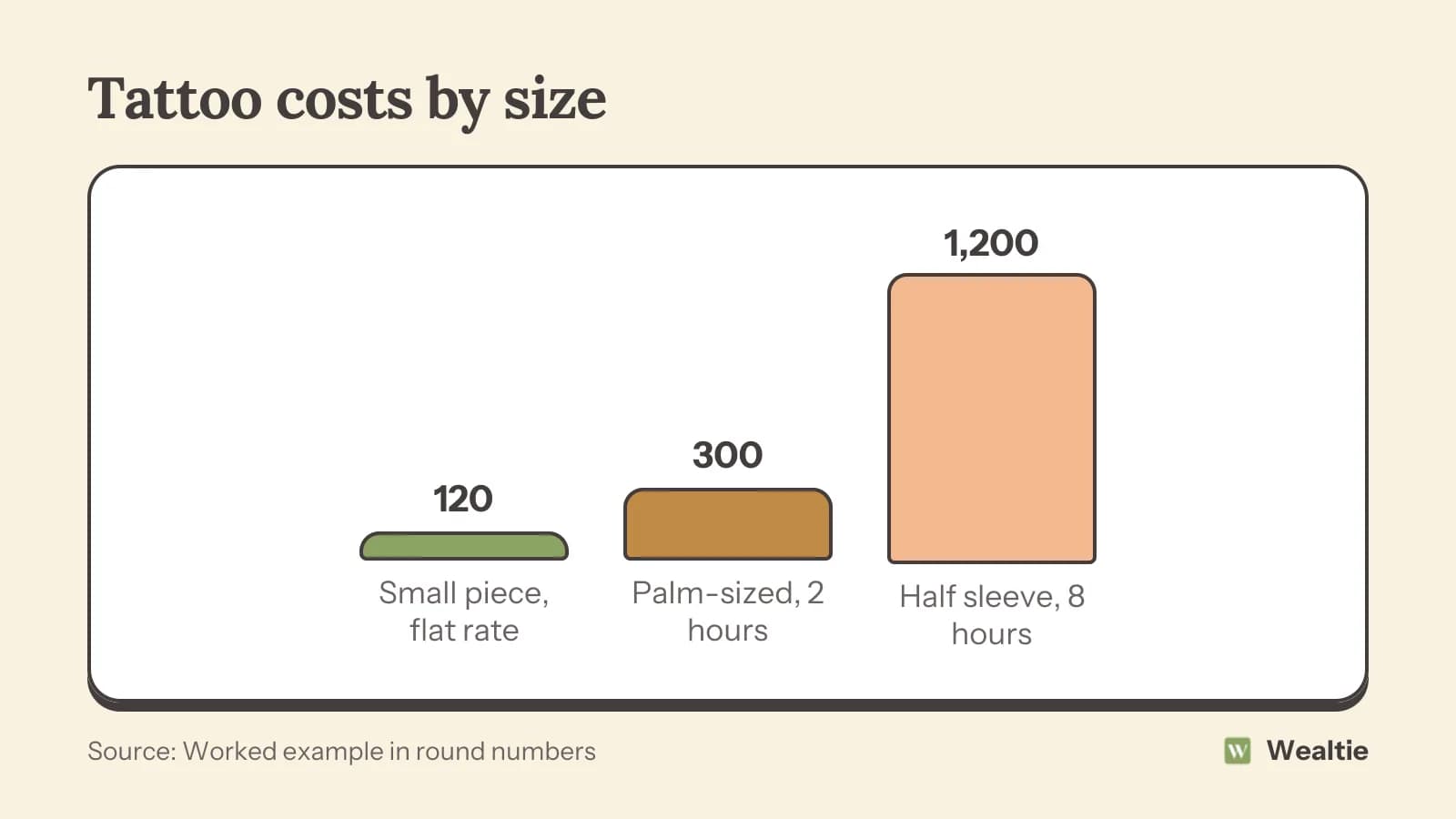
Here's a worked example, in round numbers that work in any currency, with an hourly rate of 150:
| Tattoo | Cost |
|---|---|
| Small piece, flat rate | 120 |
| Palm-sized, 2 hours | 300 |
| Half sleeve, 8 hours | 1,200 |
Rates vary a lot. Well-known artists with long waiting lists often charge more, and studios in big cities tend to cost more than those in smaller towns. Ask for a quote before booking, and check whether it includes the drawing time for a custom design.
What affects the price?
Size and detail
Larger and more detailed pieces take longer, so they cost more. Fine lines, shading and colour all add time.
Placement
Some areas, like ribs, hands and feet, are harder to tattoo and may take longer or need touch-ups.
Custom design
A fully custom design takes drawing time. Some artists include it in the price, while others charge separately or build it into the deposit.
The artist
Experience, reputation and style affect rates. A specialist in a particular style may charge more but produce work you'll be happier with for life.
Colour or black and grey
Colour work often takes longer than black and grey, which can raise the cost.
What extra costs should you plan for?
Deposits
Most artists ask for a deposit to book, often taken off the final price. It's usually non-refundable if you cancel late or miss the appointment.
Tips
In many places, tipping your tattoo artist is common. How much to tip covers tipping customs in general, and you can ask the studio what's usual locally.
Aftercare
You'll need a suitable cream or balm and possibly protective film while it heals, which costs a small amount. Following aftercare advice protects your investment.
Touch-ups
Some artists offer a free touch-up within a set time if parts heal unevenly. Ask about the policy before you book.
Travel and time off
If your chosen artist is in another city, travel adds to the cost. Long sessions may also mean taking time off work.
Why does cheap often cost more?
A tattoo is permanent, so choosing an artist mainly on price can be expensive in the long run. Fixing a poor tattoo with a cover-up often costs more than the original, and laser removal usually takes several sessions, each costing more than many small tattoos. Paying a little more for an artist whose portfolio you love is usually the cheaper decision over a lifetime.
How do you budget for a tattoo?
Get a quote first
Ask for an estimate of hours or a flat price, and what's included, before you commit.
Save ahead
For larger pieces, save before you book. A half sleeve at 1,200 over eight months is 150 a month. A sinking fund keeps the money separate.
Pay session by session
Large pieces are usually done over several sessions, often weeks apart, so you pay as you go. Plan each session's cost in your monthly budget.
Wait before booking
If a tattoo idea comes on suddenly, waiting a few weeks helps make sure it's something you'll want for life. How to stop impulse buying covers waiting rules that apply here too.
Take time to find the right artist. Look through portfolios online, especially healed photos rather than fresh ones, since they show how the work holds up over time. Visit the studio if you can, check it's clean and licensed where that's required, and talk to the artist about your idea. A good artist will tell you honestly if a design won't work at the size or placement you want, which can save you money and regret.
If you're planning several tattoos, think about them as one long-term project. Spacing them out lets you spread the cost and gives each one time to heal, and you can save for the next while enjoying the last.
Finally, protect your new tattoo from the sun once it's healed. Sunscreen helps colours and lines stay sharp for longer, which means fewer touch-ups and less spending to keep it looking good over the years.
How can Wealtie help you plan a tattoo?
Log deposits, sessions, tips and aftercare in their own expense category, and set a budget for a larger piece. You'll see the total as sessions go by and know exactly what the finished tattoo cost.
Questions people ask
Costs depend on size, detail and the artist. In a worked example, a small piece cost 120 and a half sleeve over eight hours cost 1,200.
Most charge by the hour or give a flat rate for a design, with a minimum charge for small pieces. Many also take a deposit to book.
In many places, tipping tattoo artists is common. Ask the studio what's usual locally.
A tattoo is permanent, and fixing or removing a poor one usually costs more than paying for a skilled artist in the first place.
This article is general information, not financial, tax or legal advice. Your situation is your own; check the numbers that apply to you before you act on them.