Budgeting: How to plan a bar mitzvah budget without the stress
A bar mitzvah budget covers the synagogue, the celebration and the extras, and the party is usually the biggest part. A sample budget below comes to 6,000, most of which goes on the venue and food.
 By Wealtie Team · 3 min read
Key takeaways
- A bar or bat mitzvah budget has three parts: the ceremony, the celebration and the extras.
- Venue and food usually take the biggest share.
- Starting to save a few years ahead keeps the cost manageable.
- A smaller kiddush lunch or home party can cost far less than an evening event.
What does a bar mitzvah budget cover?
A bar mitzvah marks a Jewish boy coming of age at 13, and a bat mitzvah marks the same for a girl, at 12 or 13 depending on the tradition. The religious part usually takes place in a synagogue, where the young person reads from the Torah after months of study. Many families follow it with a kiddush, a meal or a party, which can range from a simple lunch to a full evening celebration.
That range is what makes a bar mitzvah budget so personal. Some families spend very little beyond the synagogue and a family meal, while others plan an event that's close to a wedding in size. A budget helps you decide where your family sits on that range before costs start adding up, and it gives you a number to plan and save towards.
Most budgets fall into three groups:
- The ceremony: synagogue fees or donations, tutoring and preparation
- The celebration: venue, food, drinks and entertainment
- The extras: outfits, photos, invitations, decorations and favours
How much does a bar mitzvah cost?
Costs vary a lot by city, guest numbers and style, so here's a sample budget in round numbers that work in any currency, for a mid-sized evening party with around 80 guests:
| Item | Cost |
|---|---|
| Venue and food | 3,200 |
| Entertainment | 900 |
| Synagogue and tutoring | 700 |
| Outfits, photos and invitations | 700 |
| Decorations and favours | 500 |
| Total | 6,000 |
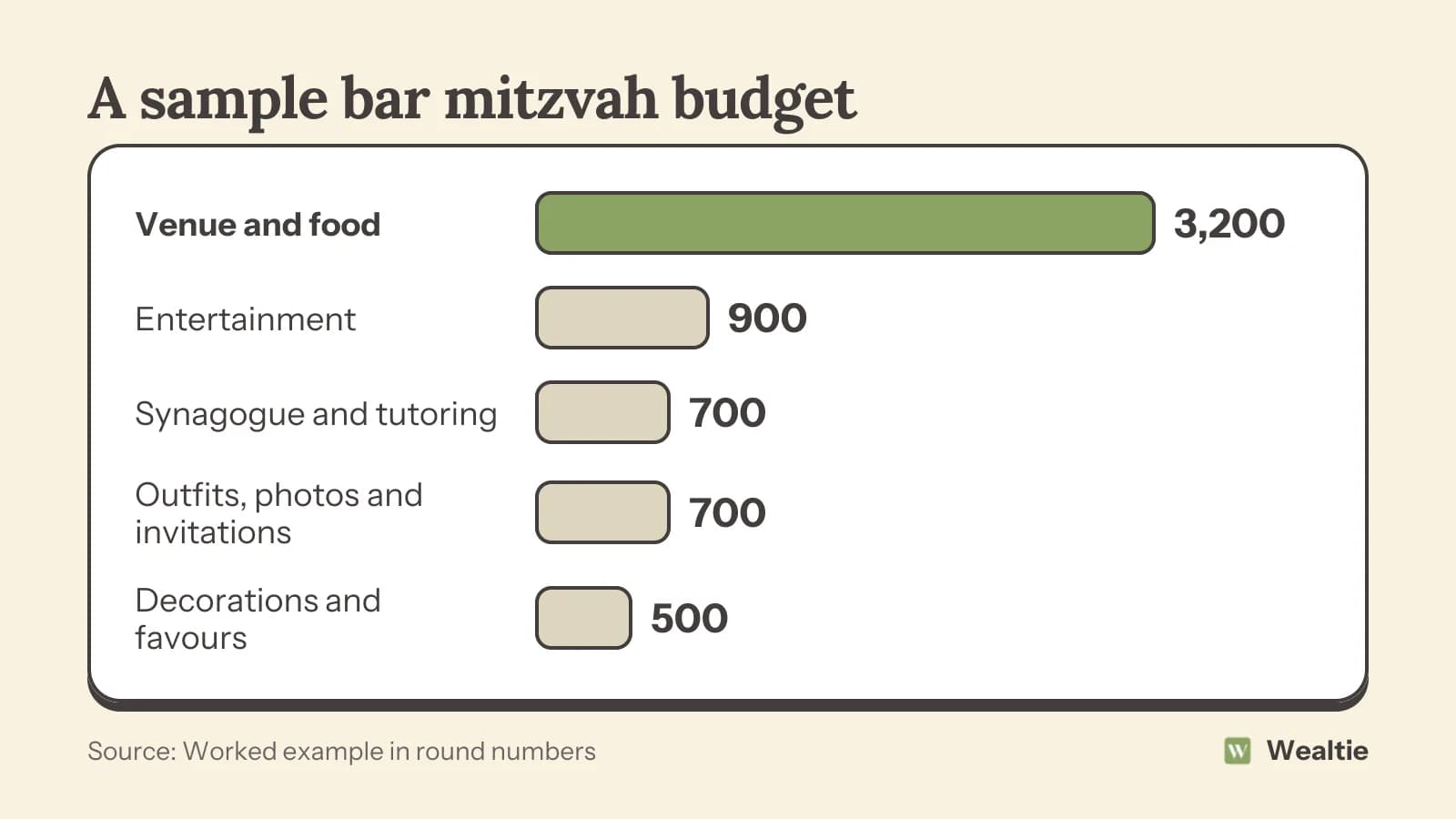
Venue and food take more than half the total, which is typical. Every extra guest adds to that line, so the guest list is the biggest lever you have. A kiddush lunch at the synagogue for the same number of people might cost a fraction of an evening event, while a large party with a band and a themed venue could cost several times more.
How do you plan the budget step by step?
Agree the type of celebration first
Decide early whether you want a kiddush lunch, a daytime party or an evening event. That one choice sets the scale of almost every other cost. Involving your child in the decision helps too, since some prefer a smaller gathering or an activity day with friends.
Set the guest list
Write the list before you book anything. Family, your child's friends, your friends and the community can all add up quickly, so agree how many people from each group you'll invite.
Get quotes for the big items
Venue, catering and entertainment usually make up most of the cost. Get two or three quotes for each, and ask exactly what's included, like tables, staff, service charges and setup times.
Add a buffer
Set aside about a tenth of the total for things you'll forget, like tips, extra food or last-minute printing.
How do you save for a bar mitzvah?
The date is known years in advance, which makes it easier to save than most big costs. If you want to spend 6,000 and start three years ahead, you'd need to put aside about 170 a month. Starting two years ahead raises that to 250.
A sinking fund works well here: a separate pot that you add to every month, used only for this event. How to save for a big purchase covers how to work out the monthly amount and stay on track.
Gifts are often money, and some families put part of them towards the event or into savings for their child. It's best not to count on gifts when planning, though, so the budget works even if they're smaller than expected.
Where can you save on a bar mitzvah?
Choose a daytime event
Lunch or afternoon parties usually cost less than evening ones, for both venue hire and food.
Use the synagogue hall
Many synagogues have a hall for hire, sometimes at a lower rate for members, and it keeps everyone in one place after the service.
Trim the guest list
Every guest you remove saves food, drink and a place setting. Keeping the list to people your child knows well often makes for a warmer day anyway.
Pick one big extra
Choose one thing to spend on, like a DJ, a photo booth or a special venue, and keep the rest simple. Guests remember the atmosphere more than the decorations.
Make or borrow decorations and favours
Friends and family can help with decorations, centrepieces and favours. Simple, personal touches often mean more than bought ones.
How can Wealtie help you stay on budget?
Create a budget for the event and log every deposit and payment in its own expense categories, like venue, food and entertainment. You'll see how much is left in each area as bookings come in, and spot early if one line is running over.
Questions people ask
Costs vary widely. A sample evening party for about 80 guests comes to around 6,000 in round numbers, while a kiddush lunch can cost far less.
Venue and food are usually the biggest cost, often more than half the total, so the guest list has the biggest effect on the budget.
Starting two to three years ahead keeps monthly savings manageable. For a 6,000 budget, three years means about 170 a month.
Choose a daytime event, use the synagogue hall, keep the guest list short and spend on one big extra instead of many.
This article is general information, not financial, tax or legal advice. Your situation is your own; check the numbers that apply to you before you act on them.