Money as a couple: Wedding planner cost: is hiring one worth it?
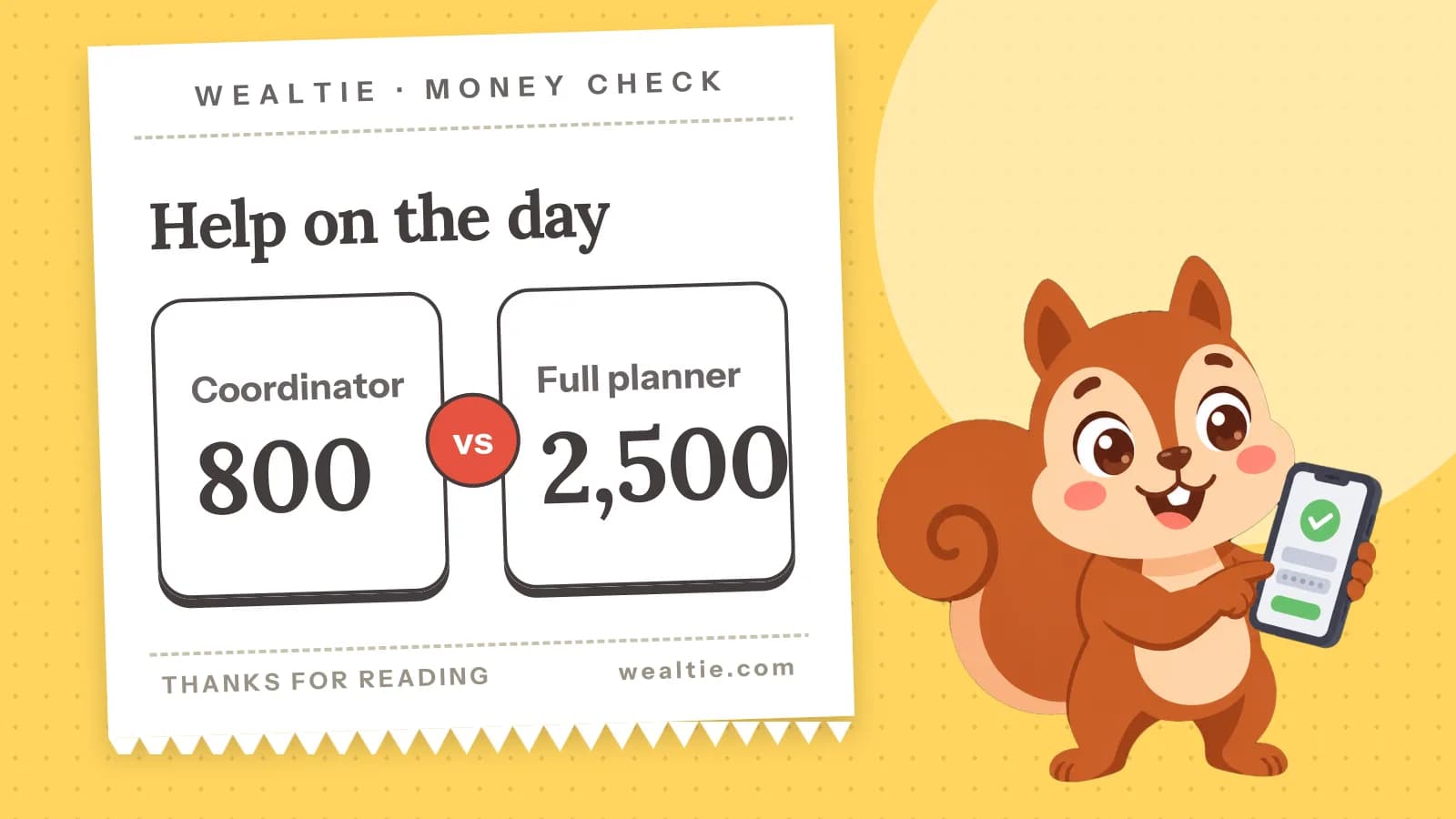
Wedding planner cost depends on how much help you want, from a day-of coordinator to full planning. In a sample 20,000 wedding, full planning costs about 2,500 and a day-of coordinator about 800.
 By Wealtie Team · 3 min read
Key takeaways
- Wedding planner cost depends on whether you hire full, partial or day-of help.
- Full planning suits busy couples, destination weddings and large guest lists.
- A day-of coordinator is the cheapest way to have a calm wedding day.
- A good planner can save money on suppliers, but only if you'd otherwise overspend.
What does a wedding planner do?
A wedding planner helps you organise your wedding, from finding a venue and suppliers to running the day itself. How much they do depends on the service you choose. Some couples hand over almost everything, while others plan the whole wedding themselves and hire someone only to make sure the day runs smoothly.
Planners bring experience and contacts. They know which suppliers are reliable, what a fair price looks like and what tends to go wrong. On the day, they handle timings, suppliers and problems, so you and your family can enjoy it instead of answering questions and chasing deliveries.
How much does a wedding planner cost?
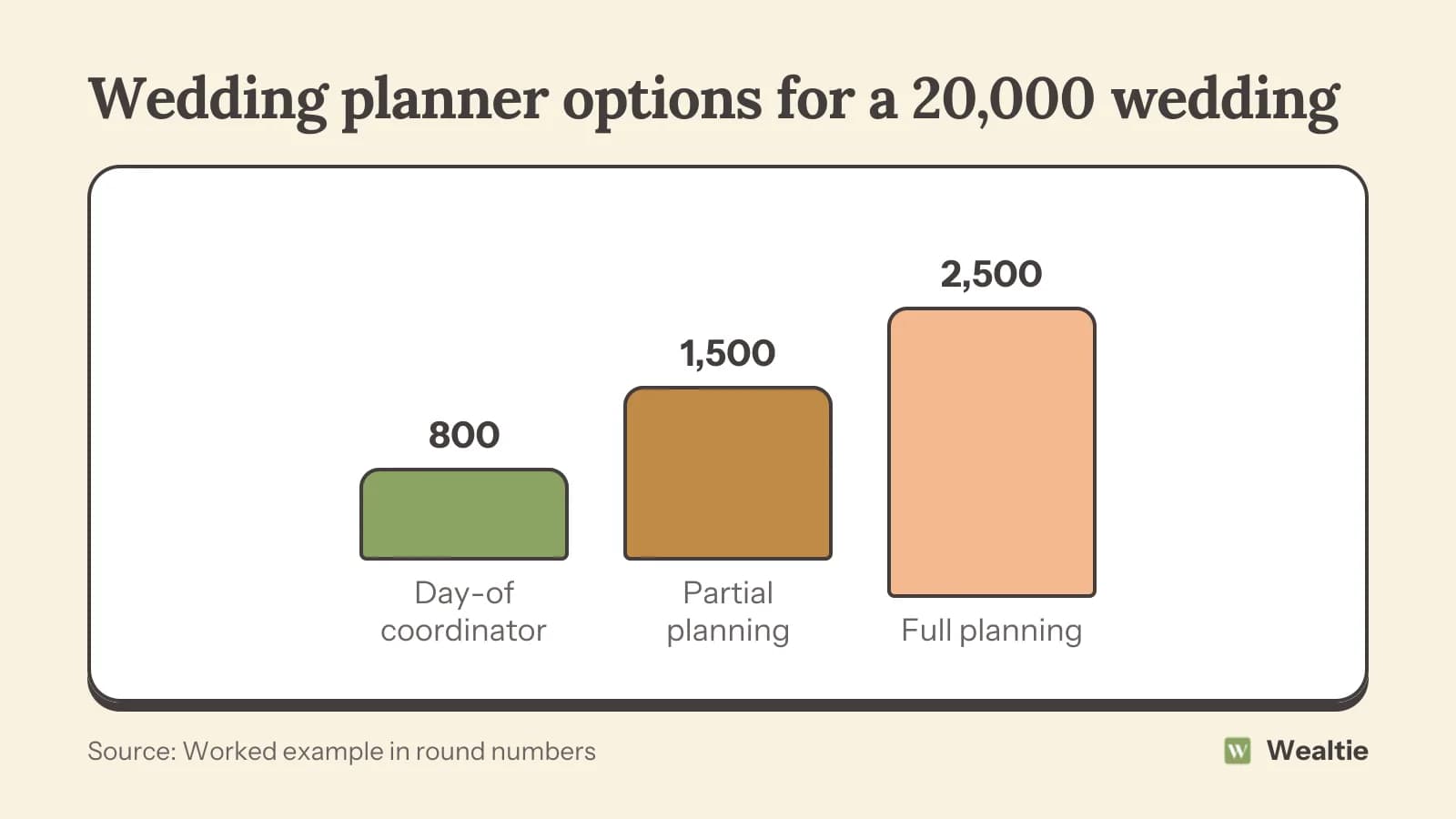
Costs depend on where you live, how big the wedding is and how much help you want. Here's a worked example for a wedding with a total budget of 20,000, in round numbers that work in any currency:
| Service | Cost |
|---|---|
| Day-of coordinator | 800 |
| Partial planning | 1,500 |
| Full planning | 2,500 |
Some planners charge a flat fee, while others base their price on the total wedding budget or the number of hours. Always ask how the fee is worked out and what's included, so you can compare quotes fairly.
What are the different types of planning?
Full planning
The planner is involved from the start, helping set the budget, find the venue, book suppliers, design the look and run the day. It suits couples who are short on time, planning from far away, or organising a large or complex wedding.
Partial planning
You do the early planning, like booking the venue and main suppliers, and the planner takes over in the last few months. They fill gaps, check contracts, build the timeline and run the day.
Day-of coordination
Despite the name, a coordinator usually starts a few weeks before the wedding. They confirm suppliers, plan the timings and manage everything on the day. You do the rest of the planning yourselves.
Is a wedding planner worth it?
When it's worth it
A planner tends to earn their fee if you're both working long hours, planning a destination wedding, have a big guest list or find planning stressful. They can also save money, for example by negotiating with suppliers or steering you away from expensive mistakes. If a planner helps you get a venue and catering deal that's 1,000 lower, that covers much of their fee.
When you might skip it
If you have a small wedding, enjoy organising and have time, you may not need full help. Many couples in that position still hire a day-of coordinator, so nobody in the family has to work on the day.
What it can't do
A planner won't make an expensive wedding cheap. If your guest list and venue choice set a high budget, the planner's job is to make that budget work, not shrink it. How to plan a wedding budget covers setting the total first.
How do you choose a wedding planner?
Meet two or three
Ask about weddings they've planned at your size and budget. A planner used to large luxury events may not suit a small, relaxed wedding.
Ask about supplier fees
Some planners receive commissions from suppliers. Ask openly, so you know whose interests come first in recommendations.
Check what's included
Ask how many meetings, hours on the day and assistants are included, and what costs extra, like travel or late finishes.
Read the contract
Look at cancellation terms, payment dates and what happens if the planner is ill on the day.
How do you fit a planner into the budget?
Add the planner as its own line in your wedding budget from the start, rather than as an extra later. If the total is fixed, the fee will need to come from somewhere else, like a smaller guest list or simpler flowers. Deciding that early keeps the trade-off clear.
Some couples get help from a friend or relative who's good at organising instead. That can work, but it means they spend the day working rather than celebrating. If you go that way, give them a clear timeline and a list of supplier contacts, and consider paying them or giving a thoughtful gift for their time, since it's a big job.
How can Wealtie help you track wedding costs?
Set a budget for the wedding and log the planner's deposit and every supplier payment in its own expense categories. If you're planning as a couple, sharing the budget means you both see how much is left before you agree to anything new.
Questions people ask
Costs vary by location and service. For a sample 20,000 wedding, a day-of coordinator might cost about 800 and full planning about 2,500.
A planner helps from the early stages, booking venues and suppliers. A coordinator usually starts a few weeks before and runs the day itself.
A planner is often worth it for busy couples, destination weddings and large guest lists, and can save money on suppliers.
Yes, by negotiating with suppliers and avoiding costly mistakes, though a planner won't make an expensive wedding cheap.
This article is general information, not financial, tax or legal advice. Your situation is your own; check the numbers that apply to you before you act on them.