Budgeting: How to plan a Diwali budget for gifts, food and celebrations
A Diwali budget covers gifts, sweets and food, decorations and lights, new clothes and visits to family. In a worked example, Diwali for a family of four costs about 450, and planning each part ahead keeps the celebration bright without the stress.
 By Wealtie Team · 3 min read
Key takeaways
- A Diwali budget covers gifts, sweets and food, clothes, decorations and visits.
- In a worked example, Diwali for a family of four costs about 450.
- Making some sweets at home and reusing decorations each year keeps costs down.
- Agreeing gift amounts with family helps keep giving generous but affordable.
How do you plan a Diwali budget?
List the parts of the festival your family celebrates, set an amount for each, and save in the months before. Diwali brings lights, sweets, gifts, new clothes and time with family and friends. It's a joyful festival, and planning the money side means you can enjoy it without worrying about the cost afterwards.
Traditions vary between families and regions, so shape the plan around what Diwali means for you.
What does Diwali cost?
Here's a worked example for a family of four, in round numbers that work in any currency:
| Cost | Amount |
|---|---|
| Gifts for family and friends | 150 |
| Sweets and festive food | 120 |
| New clothes | 100 |
| Decorations and lights | 50 |
| Visits and travel | 30 |
| Total | 450 |
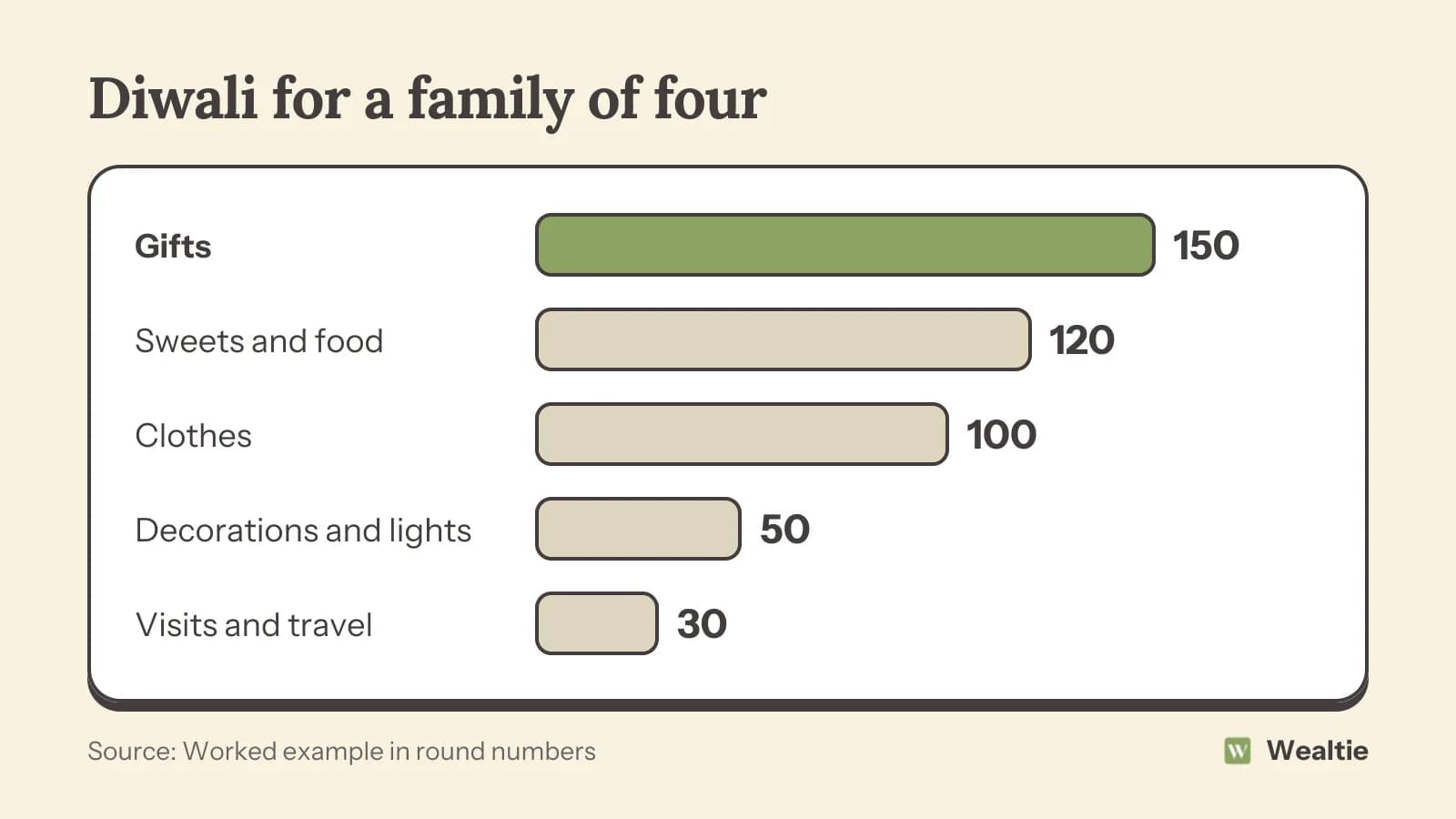
Your figures will depend on how many people you buy for, whether you host and how far you travel.
How do you keep gifts affordable?
Agree amounts with family, and make a list before you shop. Gift exchanges can grow every year, especially in large families. A Secret Santa-style draw, where each person buys for one other, or a family agreement on a limit, keeps giving generous without the cost spiralling. The Secret Santa budget has ideas for group gifting.
Homemade gifts, like sweets in a nice box, are traditional and often more personal than bought ones.
Gifts for colleagues and neighbours
Many people also exchange small gifts with colleagues, neighbours and friends. These are easy to forget when planning, and they add up. Decide a small, fixed amount for each, or give a shared box of sweets to a whole office or building rather than separate gifts. Writing everyone on one list, with an amount beside each name, shows the full total before you start buying.
How do you save on sweets and food?
Make some at home. Many families make a few favourite sweets and savouries together, which costs less than buying them all and becomes part of the celebration. Buy ingredients like flour, sugar, ghee and nuts in larger amounts before the festival, when they're often cheaper. If you buy sweets, compare shops and order early.
Sharing food between households, with each family bringing something, spreads the cost of gatherings.
How do you save on decorations?
Reuse them. Lights, lanterns and decorations can last for years if stored carefully. Add a few new pieces each year rather than buying a full set. Clay lamps can be reused, and handmade rangoli with coloured powder, rice or flowers costs very little. Choosing energy-efficient lights keeps electricity costs down over the festival.
Fireworks and sparklers
If your family buys fireworks or sparklers, set an amount for them in advance, since they're easy to overspend on. Buying from reputable sellers and following local rules keeps everyone safe. Some families now enjoy community displays instead, which can be more spectacular and cost little or nothing.
What about new clothes?
Plan and shop early, since prices can rise close to the festival. Set a clothes budget per person before you shop and buy from a list, so the festive mood in the shops doesn't push the total up. Some families buy one special outfit each and wear it again for weddings and other occasions. For children, who grow quickly, second-hand or hand-me-down outfits in good condition can be just as special.
How do you save for Diwali?
Start a few months before. Divide your total by the months until Diwali and put that aside each month. A 450 Diwali saved over five months is 90 a month. Keeping it in a separate pot means it's ready when you need it. A sinking fund is a simple way to save for costs like this that come round every year.
Diwali often falls in a busy season of festivals and celebrations, so planning ahead stops it clashing with other costs later in the year.
Why a simpler celebration still works
Diwali is about light, togetherness and new beginnings. Lighting lamps together, sharing food and spending time with loved ones are at its heart, and they don't depend on how much is spent. Children often remember the lights and the gatherings more than any gift. Inviting friends who are away from their own families, or sharing food with neighbours, are among the most generous parts of the festival, and they cost very little.
How do you track Diwali spending in Wealtie?
Add a savings account for festivals and move money into it each month as a transfer, which isn't counted as spending. During Diwali, log costs in a Holidays or Gifts category, so your expense categories show what it came to. A monthly limit in the budget tracker keeps the rest of the month on track.
Questions people ask
A worked example for a family of four comes to about 450, covering gifts, sweets, clothes, decorations and visits. Your own figure will follow your family and traditions.
Agree gift limits with family, make some sweets at home, reuse decorations and shop early for clothes.
Homemade sweets in a nice box, small personal gifts and family gift draws where each person buys for one other.
A few months before. A 450 Diwali saved over five months is 90 a month.
This article is general information, not financial, tax or legal advice. Your situation is your own; check the numbers that apply to you before you act on them.